File: c:/ddc/Angel/BestIntentions/Introduction.html
Date: Thu Aug 16 22:06:51 2012
(C) OntoOO/ Dennis de Champeaux
Introduction
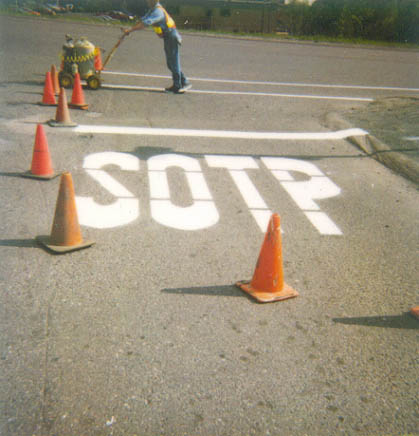 Most of us view the world as more benign than it really is, our own
attributes as more favorable than they truly are, and the goals we
adopt as more achievable than they are likely to be.
Most of us view the world as more benign than it really is, our own
attributes as more favorable than they truly are, and the goals we
adopt as more achievable than they are likely to be.
(Daniel Kahneman)
We also tend to exaggerate our ability to forecast the future, which
fosters optimistic overconfidence.
(Daniel Kahneman)
In terms of its consequences for decisions, the optimistic bias may
well be the most significant of the cognitive biases.
(Daniel Kahneman)
Because optimistic bias can be both a blessing and a risk, you should
be both happy and wary if you are temperamentally optimistic.
(Daniel Kahneman)
One generation's solution is the next generation's problem.
(Anonymous professor, as quoted by Bob Segall)
The 21st century has had a tough start with the first decade.
Nine-eleven was a major disruption for which no one wants to pin-down
a succinct label: religious conflict? culture clash? democracy versus
theocracy? Whatever label applies, its impact is still festering with
no end in sight. Finally, the decade yielded economic turmoil through
an amazing sequence of bad judgments by a still growing number of
parties.
We claim that these developments, which have been very visible, mask
'deeper' problematic processes that have been in the works since the
beginning of the 20th century. The cold war masked these deeper
processes to the point that we may accept them now as normal,
semi-natural forces.
The 20th century will keep many experts busy to slice and dice the
many different angles possible. While every century must live with
the inheritance of the preceding one, the 21st century has gotten more
than its fair share ... of precious assets, of horror, of fabulous art
movements, of horrendous depravity, of major Science developments, of
genocides beyond comprehension, of Mother Theresa's compassion, of
Hitler's derangement, of affluence for the masses, of poverty for
other masses, of muddle through democracies, of crash and burn
dictatorships, of well meaning, compassionate sacrifices, of evil,
self-centered, ruthless murdering, of responsible mega corporations,
of plunder the planet companies, of live within your means countries,
of bankrupting countries, ...
This we will all leave for the experts to chew on.
But then there were the people, born, raised, living and dying who are
just there in a great flux of happenings. Their lives were different
dependent on the circumstances of their locations or their lives were
all similarly impacted by the waves going through the decades.
We are getting closer to what we are after in this exploration.
Well, we will not deal with unique individuals, but with the decisions
made by typical individuals as facilitated by slowly expanding
choices.
The roots of these developments are in the 19th century. The US and
the French revolution had expanded rights to larger segments of the
population. Darwin threw cold water on these rights by the notion of
individuals having different abilities to survive.
The 20th century went out of its way to compensate for this
unfairness. Communism proposed that individuals consume according to
their needs and contribute according to their abilities. Other
societies did not go as far but in response they established
entitlements that helped those less able to get compensation for their
plight.
These compassionate, well meaning entitlement have done wonders.
However, over time their unintended side effects have become, let's
say, questionable. These side effects are what we will look into.
Major entitlements in welfare states that make up sizable segments in
their economies are: education and healthcare. These segments are
atypical in that they are consumptive, financed by taxes on all the
other segments. Their fuzzy economic status gives rise to anomalies
that we will dig into.
Current economies are still increasing in complexities, internally
with governments playing an ever-larger role in financial transfers
and externally through globalization. Both of these developments
create new sources of volatility, leading to worldwide disturbances.
Gross Domestic Product (GDP) is a major tool used to guide economies.
We will contrast GDP with proposed alternatives as a lead-in to
critique the general use of GDP to measure a society's well being.
Democracies established during the preceding two centuries were
designed with calibrated and balancing forces to compensate for the
out of control governments in preceding centuries. The press (now the
media) was assigned a role to alert when the calibrated forces got out
of balance and/or when entropy inside or outside the government
endangered 'normality'. We ponder the eroding ability of the
press/media to perform its role.
These democracies are traditionally seen as slowly moving and mostly
reactive to unfolding developments. We will argue that they need an
upgrade to fix loopholes emerging in the preceding centuries and to
address the Tragedy of the Commons that has become a major global
destructor.
Why?
The consequences of unintended side effects turn out to be a major
theme in our deliberations. For example, compassion and altruism are
important values. Helping others in need is crucial to mitigate the
cruel impacts of the human condition. But then we observe that
institutionalized assistance, while doing its beneficial work,
increases slowly over time the need for assistance. This is not an
argument against compassion, altruism and helping others in need, but
it does question the systems that we have developed to deal with
situations that we prefer not to be reminded about and for which we
think it is great that the society has made provisions.
We will also consider causal linkages between the different topics
that are usually out of scope for the experts.
Obstacles
The material we discuss often leads to heated discussions. Defensive
stances are common along the lines of:
- "Sure, but what you describe has always been the case."
- "That cannot be true (because it would be devastating/ would
eliminate hope/ ...)"
- "So what?"
- "I don't believe it and there is no solution to what you
describe anyway."
- "I believe instead that capitalism/ big business/ the left/
the right/ the immigrants/ the 'others'/ ... is what we have to
fight against."
This list can be extended endlessly. Accusations of being left/
right/ elitist/ etc. and being labeled in general as 'something', all
indicates that we are touching raw nerves.
The question whether we have viable solutions for what we address is
tricky. We describe developments over a period of a century with
deeper historical roots and with entrenched stakeholders. Expecting
short-term fixes beyond the general concepts we formulate at the end
is not realistic, but we are happy to be corrected by better minds.
Why again
This text is part of a genre that has trouble to get through.
Jared Diamond's Collapse [Diamond] is a massive volume
describing how previous civilizations got into trouble and
disappeared. It is meticulously researched and 'pleasantly' written.
Still, he has virtually no impact on our politicians and our leaders.
Dennis Meadows et al [Meadows] published several books about the
21st century based on a computer simulation. He and his coauthors get
little traction. The future they find in their simulation looks quite
grim. Yet another computer simulation 'predicts' what may happen until
2050 extending the [Meadows] model by extrapolating what happened
during 1970-2010 [Randers].
Ancient civilizations disappearing can be easily shrugged off and a
computer simulation has the appeal of a headache. Perhaps these
authors are too polite and too academic to be taken serious.
This text is more like the dentist drill getting close to the root.
We also are blunt enough to articulate fixes that others (must) shy
away from.
Who are we?
By now the question must have emerged where we are in the political
spectrum. The real answer is that we are severely worried; and that
we are politically neutral. For those who need to remind us that this
is impossible, we mean that we blame left and right for having created
a world that we are disappointed about, that we do not like, that we
consider unsustainable, that we consider to be dangerously unstable.
Mini Guide
20th centuy
The first part describes a few selected aspects of welfare states.
The chapters on public education and healthcare are somewhat specific
for the US. They are both atypical segments of a nation's economy
with remarkable anomalies.
The Economy chapter claims that the widely used GDP metric gives
misleading readings of a nation's well functioning. We report
worrisome financial statistics about the population of the US and the
Netherlands and similarly astonishing data about the US states.
Murray's sociological study Coming Apart, [Murray], regarding top
and bottom segments in the US society is summarized in the Fishtown
chapter. His text is a vivid elaboration of the Appendix Income
Divergence in the Economy chapter.
The chapter on the Press argues that they are loosing significance and
especially fail to perform their democracy watch dog function.
Democracies are critiqued as being out of date and requiring
upgrades. Economic sustainability and ecologic zero footprint are key
missing concepts. The Tragedy of the Commons plays a crucial role in
the absence of a global world authority.
21st century
The second part deals with perspectives on the 21st century. It
starts with the statistics and dynamics of the world population.
Subsequently, we consider the global situation by reviewing and
commenting on the works of Jared Diamond [Diamond]. His Collapse
book summarizes his life-time insights about the fate of
civilizations during the previous 40,000 years.
Dennis Meadows et al [Meadows] developed around 1970 the World3
simulator. We discuss their series of publications. A subsequent
chapter gives the output of newer scenarios. Only outlandish policy
interventions prevent a collapse according to the World3 simulator -
of course ignoring the divine magic of human ingenuity that could
yield an unexpectated breakthrough.
Jorgen Randers's '2052' model [Randers] is described
next. It is a modification and extension of a specific World3
scenario. More attention is given to different ways to provide
energy and on the impact of climate change.
Candidate triggers causing things to go out of hand are sketched in
the chapter 'What If?'.
A way out?
We formulate in the third part additional candidate fixes. These are
at a way higher abstraction level than the fixes in earlier chapters.
Many deplore globalization; our future is, however, a common
destiny, for good and for worse.
References
[Diamond] Diamond, J., "Collapse: How Societies Choose to Fail or
Succeed", New York: Viking Books, ISBN 1-58663-863-7, 2005.
[Meadows] Meadows, D., J. Randers, & D. Meadows, "Limits to Growth,
The 30-Year Update", Chelsea Green Publishing Co., 2004.
[Murray] Murray, C., "Coming Apart", Crown Forum, NY, 2012.
[Randers] Randers, J., "2052, A Global Forecast for the Next Forty
Years", Chelsea Green, 2012.
Back to index